
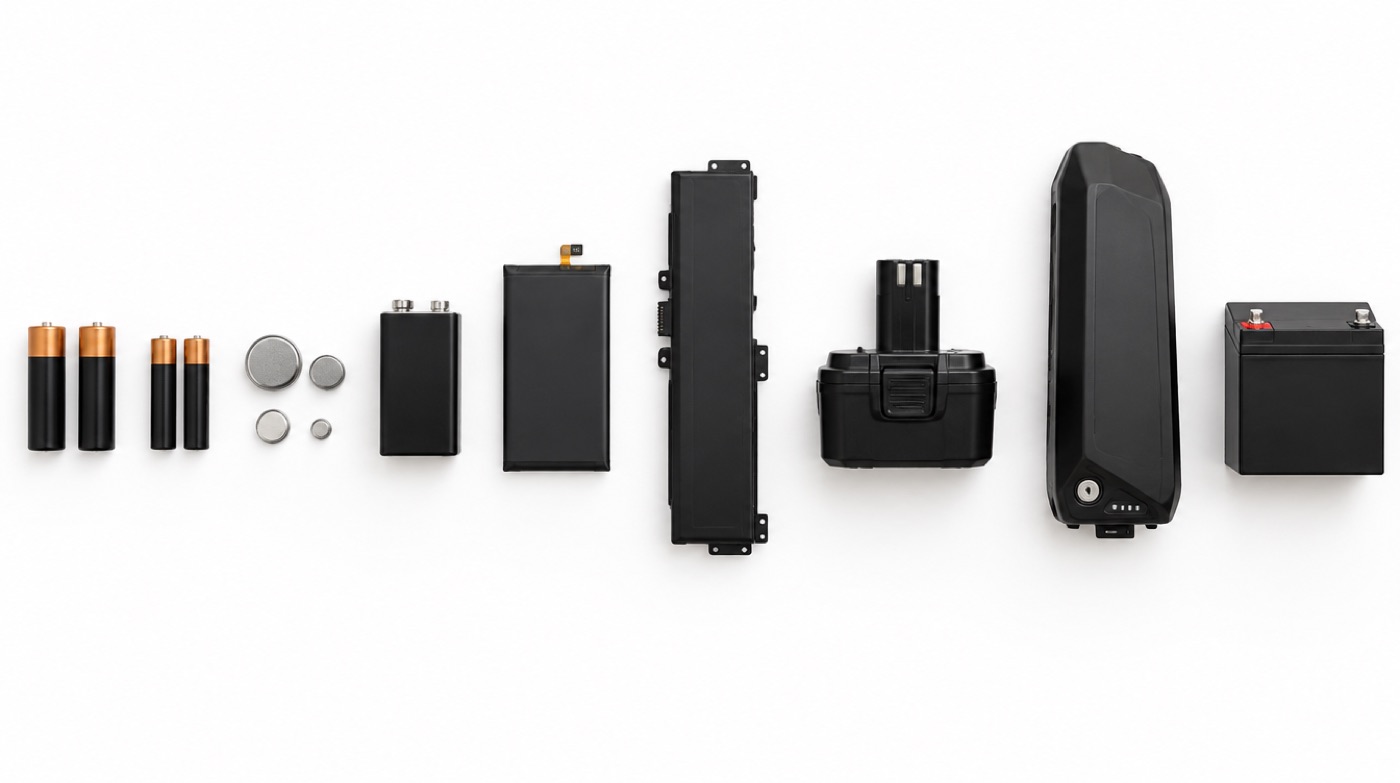
Dispose of batteries correctly
Why lithium batteries are dangerous and why recycling matters.
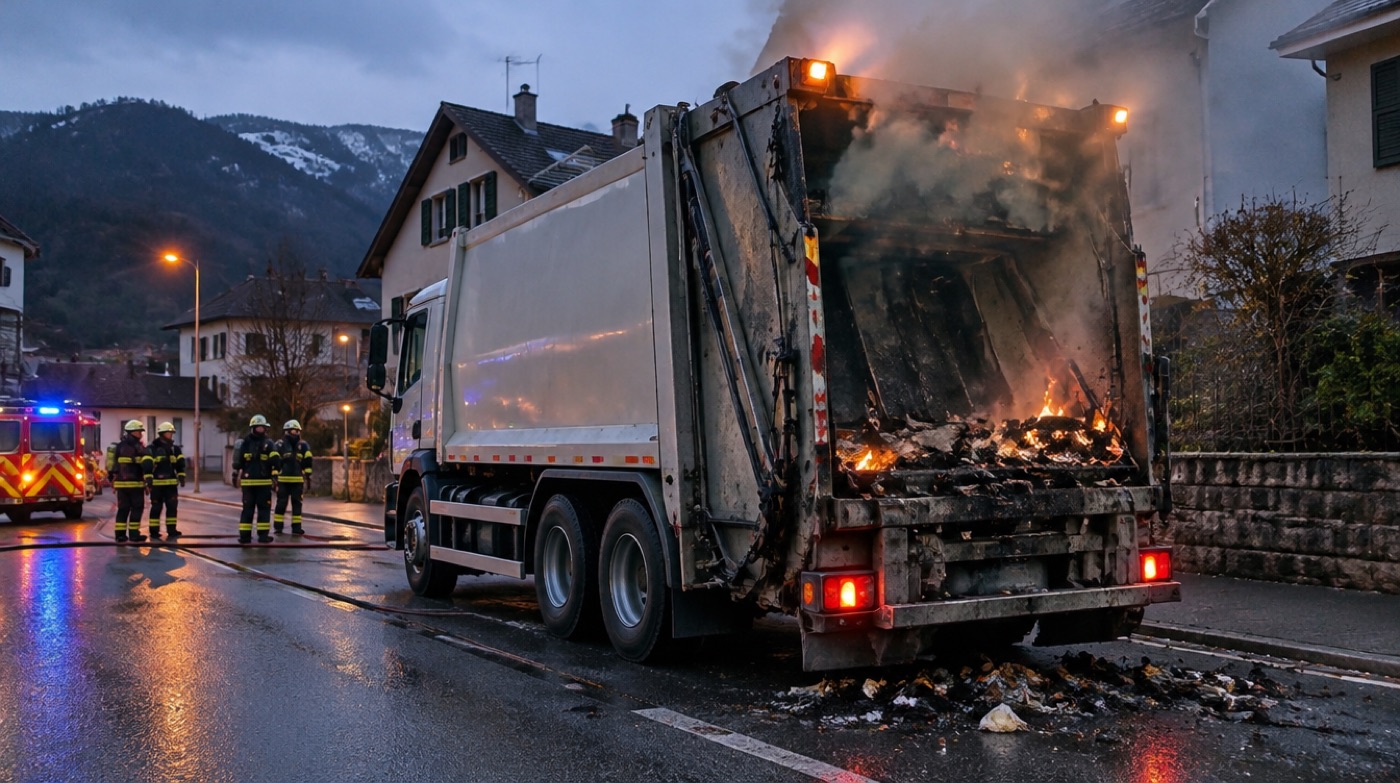
Batteries can catch fire
Lithium batteries store a lot of energy in a small space.
If a battery is damaged, too hot, too deeply discharged or overcharged, a short circuit can happen. Then the battery can catch fire.
In Switzerland, there are more and more fires in bins, garbage trucks and sorting plants because batteries end up in the waste.
Numbers that make you think
There is no national statistic on battery fires in Switzerland. These numbers come from documented partial surveys.
up to 30
major fires a year in Switzerland are caused by wrongly disposed lithium batteries, according to the industry association Recycling Schweiz.
saldo 4/202610 → 30
fires a year involving lithium batteries in the canton of Vaud: about 10 until 2020, almost 30 today.
SRF, 7.9.2026 (ECA Vaud)84
times, 115 Swiss recycling companies named lithium batteries as the cause of a fire. It was the most frequent cause.
EUWID, 10.9.2024100 g
of batteries per person and year end up in household waste in Switzerland instead of the collection.
saldo 4/2026 (FOEN)1 in 5
electrical fires is caused by lithium batteries (Germany). According to BFB, Switzerland is comparable.
BFB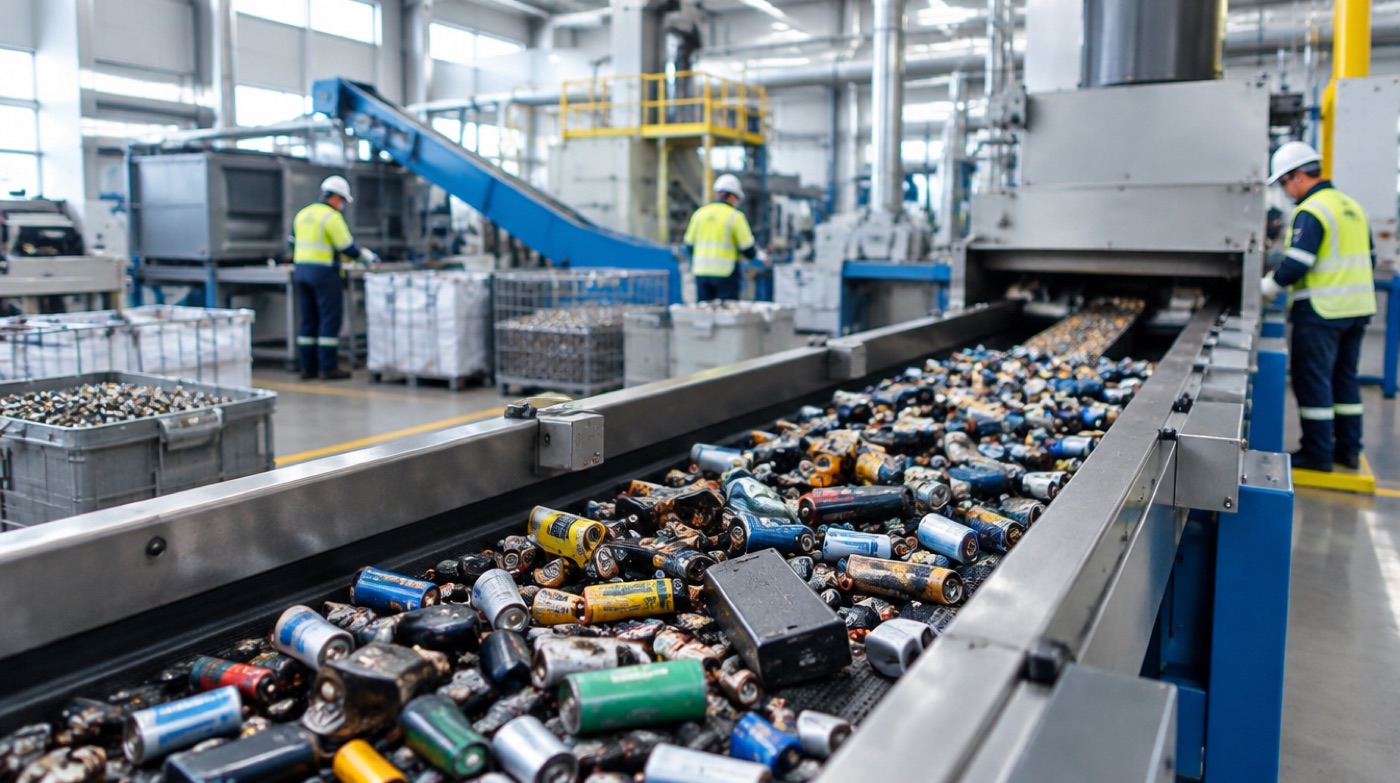
Facts
- In a battery collection, about 3 in 100 batteries are lithium-ion batteries.
- Today, almost all rechargeable batteries are lithium-ion batteries.
- All shops must take back batteries free of charge. There are more than 11,000 collection points in Switzerland.
- Disposal is already paid for: since 2001, a fee has been included in the purchase price.
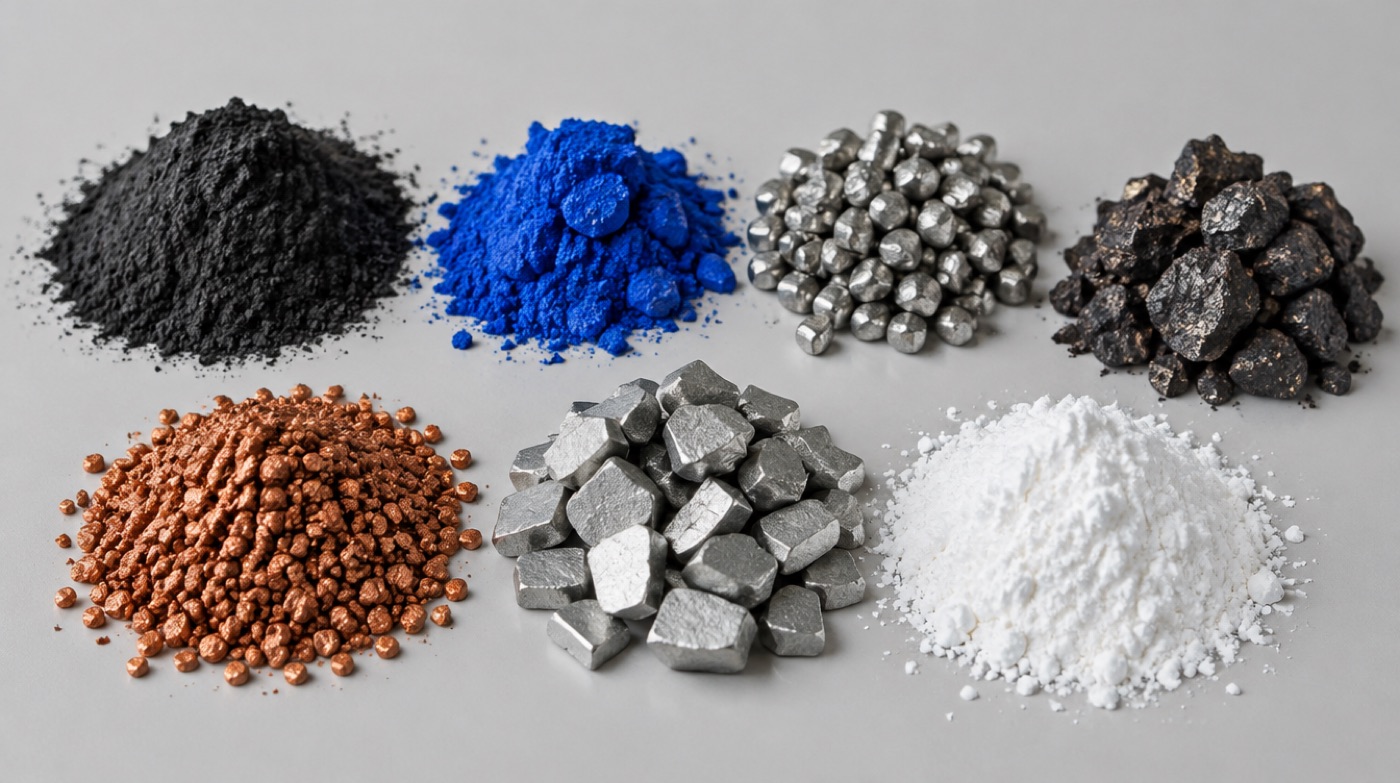
Old batteries become raw materials
Batteries are made largely of valuable materials.
Recycling recovers graphite, cobalt, nickel, manganese, copper, iron, aluminium and lithium. These are used to make new products.
One kilo of collected batteries saves as much environmental impact as a train journey from Bern to Geneva causes.
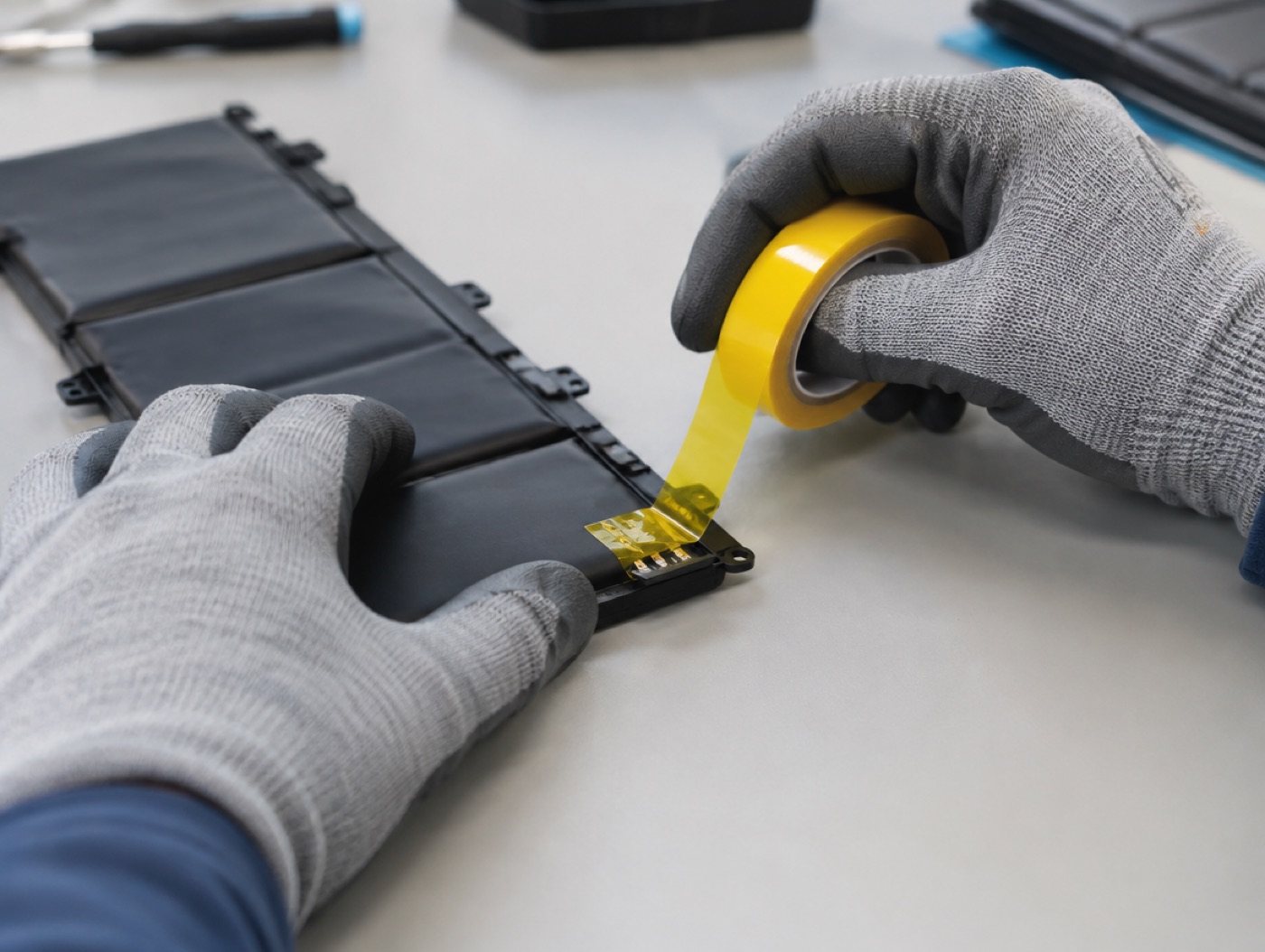
How to do it right
- Never throw batteries in the waste.
- Cover battery terminals with tape or put each battery in its own plastic bag.
- Put small batteries, rechargeable batteries and lead batteries separately into the right containers.
- Do not remove the granules (vermiculite) from the drum. They protect against fire.
- Do not throw in swollen or damaged batteries; report them.
- Hand in built-in batteries (phone, toothbrush) together with the whole device.
Which battery is it?
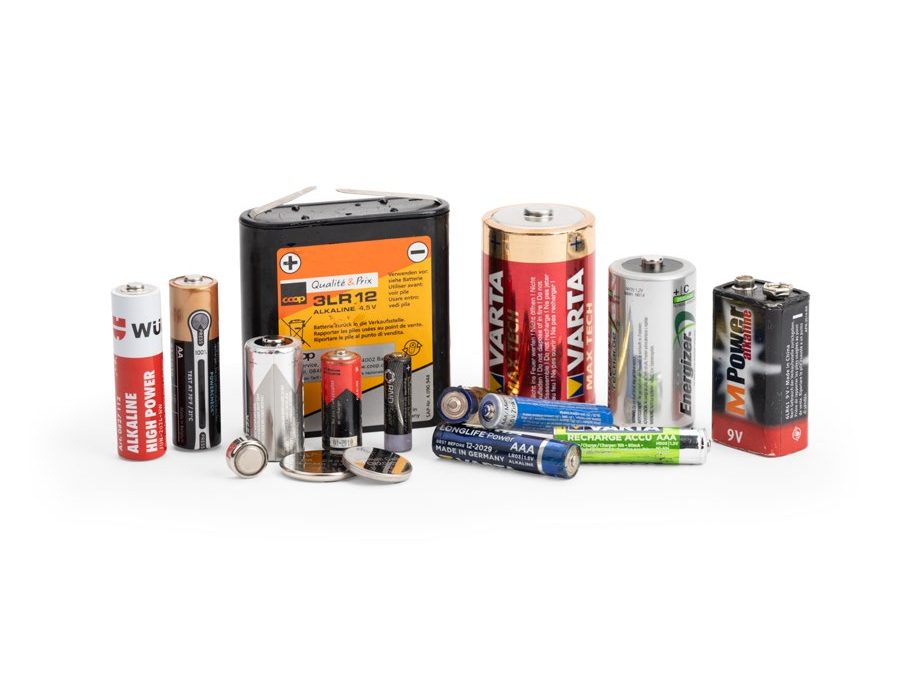
Small batteries
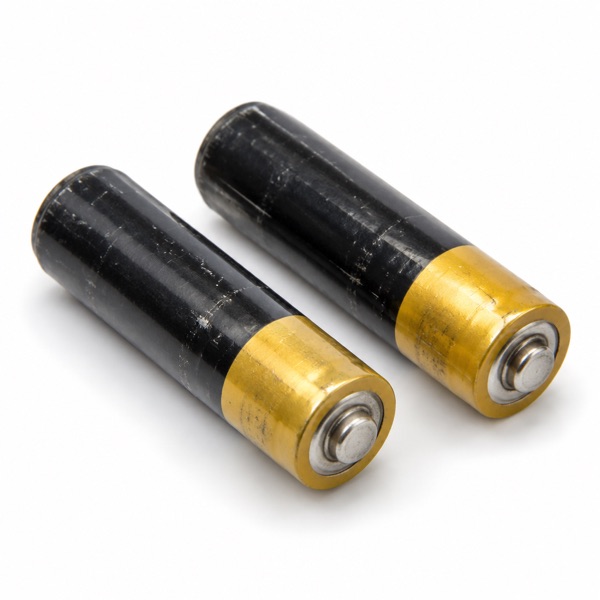
Round cells AA, AAA, C, D, button cells, 9-volt blocks.
→ Small collection drum
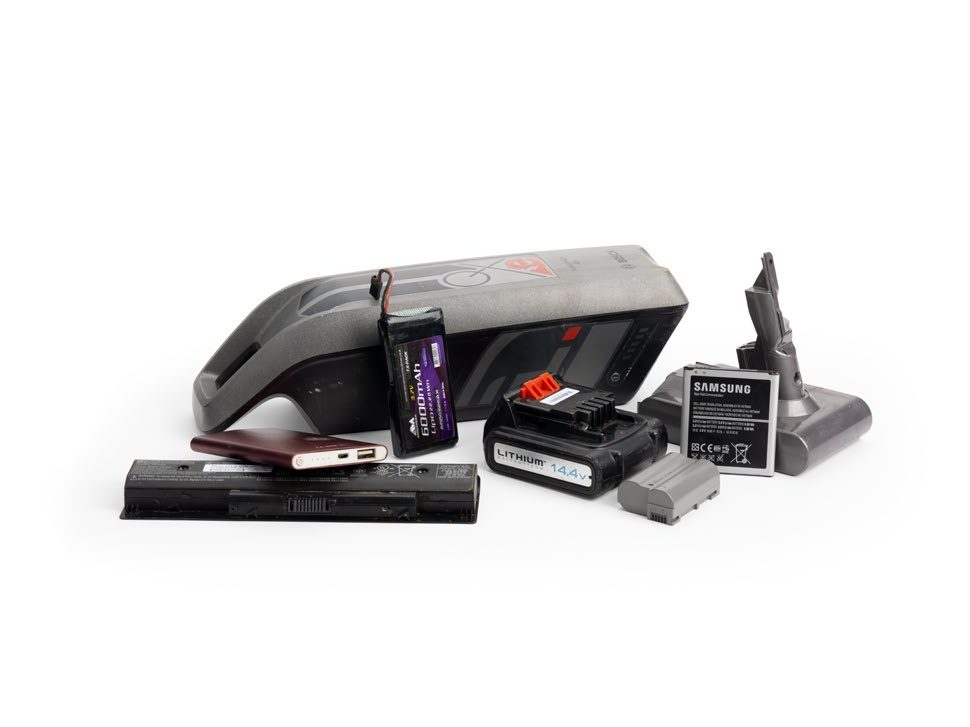
Lithium batteries
Rechargeable, often marked “Li” or “Li-Ion”. Laptop, tool, bike, power bank.
→ Black steel drum
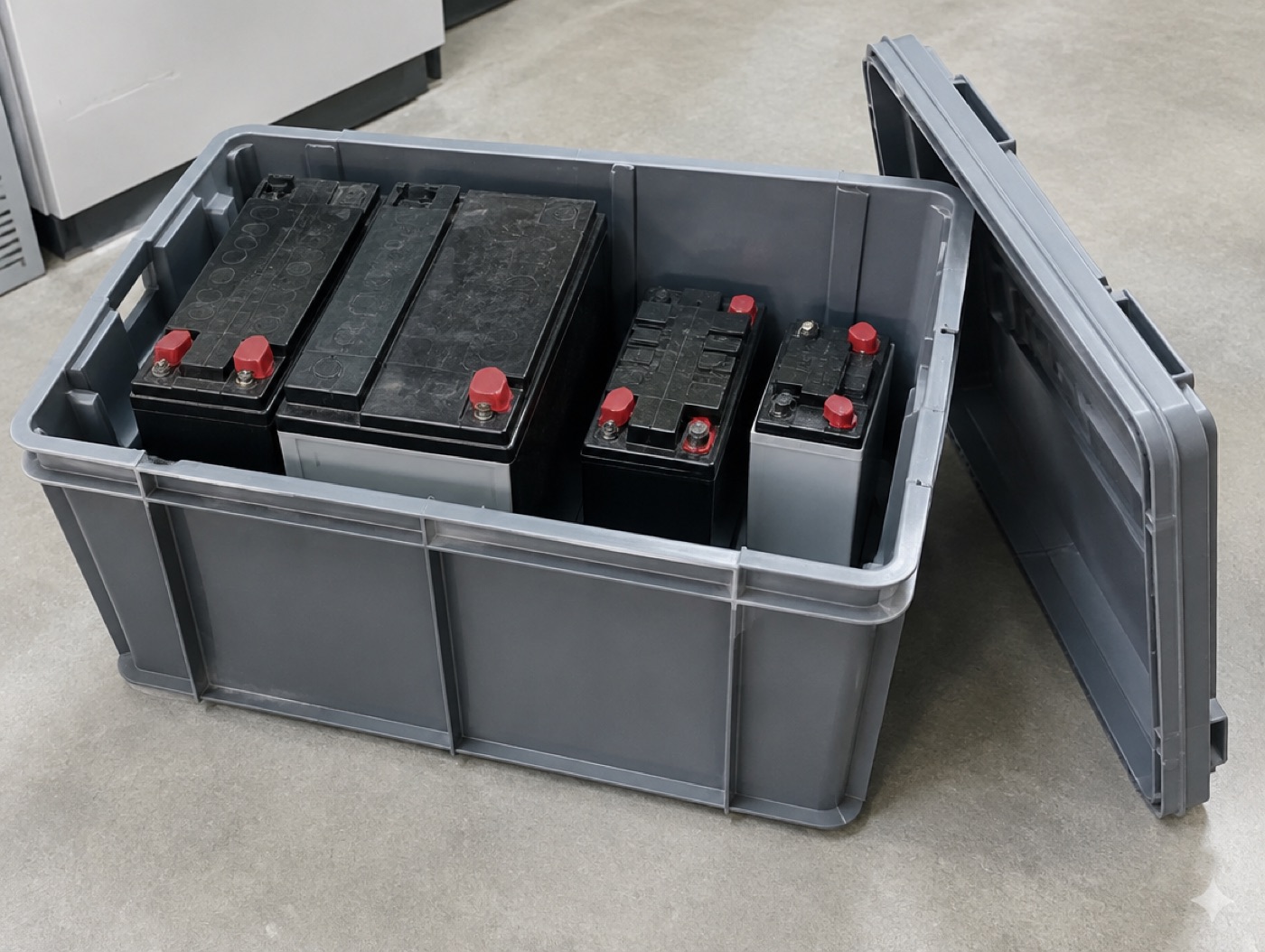
Lead batteries
Heavy, square, often with acid. UPS, emergency light, car, motorbike.
→ Box for lead batteries
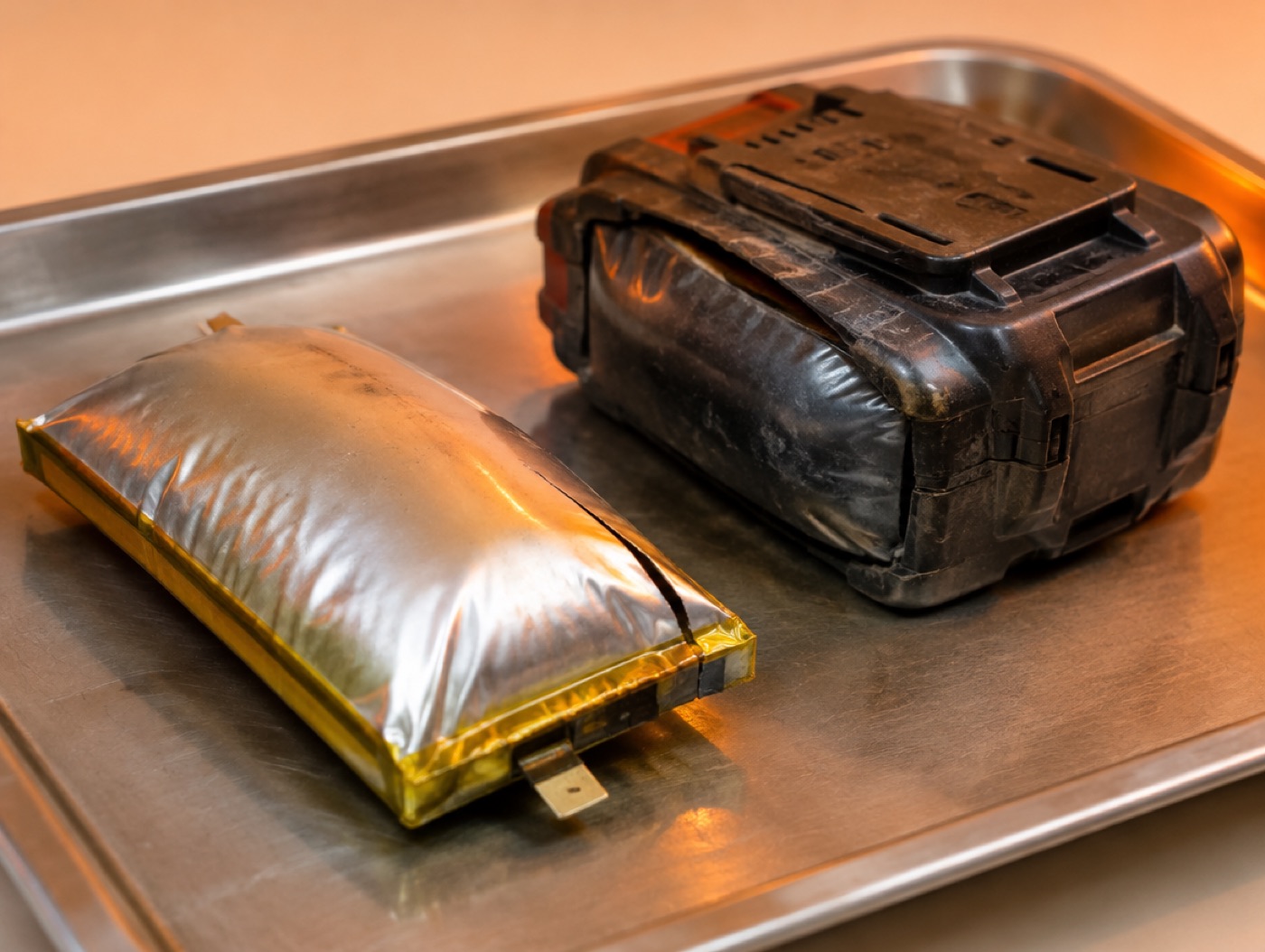
Damaged batteries
Swollen, deformed, leaking, hot or dropped.
→ Do not throw in, report
In short: battery types
Small batteries (alkaline, zinc-carbon, NiMH)
- Usually 1.5 volts, not rechargeable. NiMH batteries are rechargeable, 1.2 volts.
- They contain zinc, manganese and steel. They are not dangerous goods.
- Still, not in the waste: the metals are recovered.
Lithium batteries
- Lithium-ion batteries have about 3.6 volts per cell and store a lot of energy.
- Lithium button cells (for example CR2032) have 3 volts and are not rechargeable.
- The contents are flammable. After a short circuit or damage, the battery can get very hot and burn.
Lead batteries
- 2 volts per cell, a car battery has 12 volts.
- They contain sulphuric acid (corrosive) and lead (toxic).
- They are dangerous goods of class 8 and belong in an acid-proof box.
Damaged batteries
- Swollen means: gas is forming inside.
- Such a battery can catch fire at any time, even without a charger.
- Do not throw it in; report it. It is packed on its own in a special way.
Quiz: which battery goes where?
Can you recognise the battery type? Choose the right container.
1 / 8
AA batteries
Battery smoking or burning?
- Do not touch.
- Leave the room, close the door, warn others.
- Call the fire brigade.
Fire brigade 118 or your company’s emergency number